

AML & Transaction Risk Analytics
Wallet risk, exposure and fund-flow analysis.
Service overview
Know where value came from, and where it went.
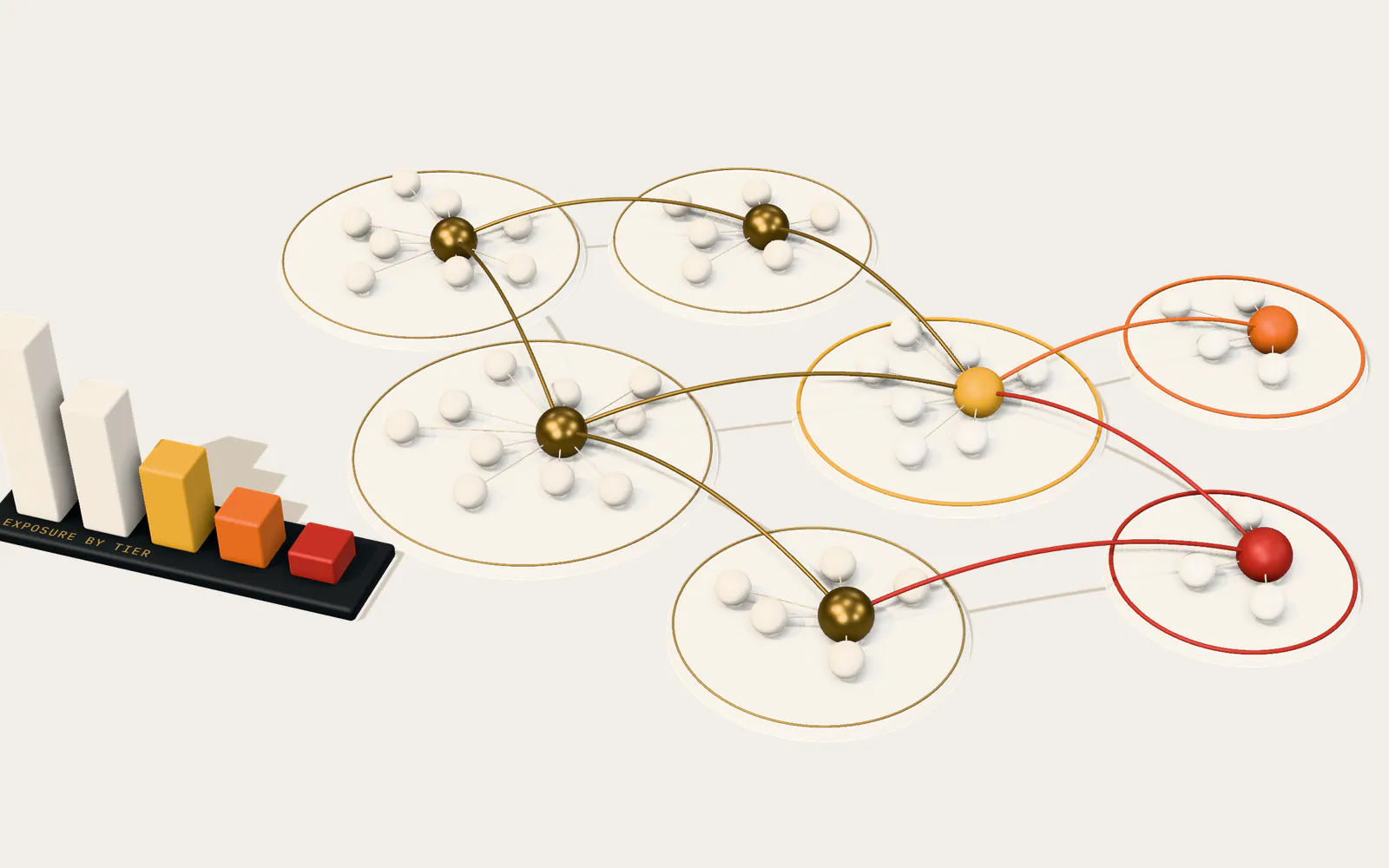
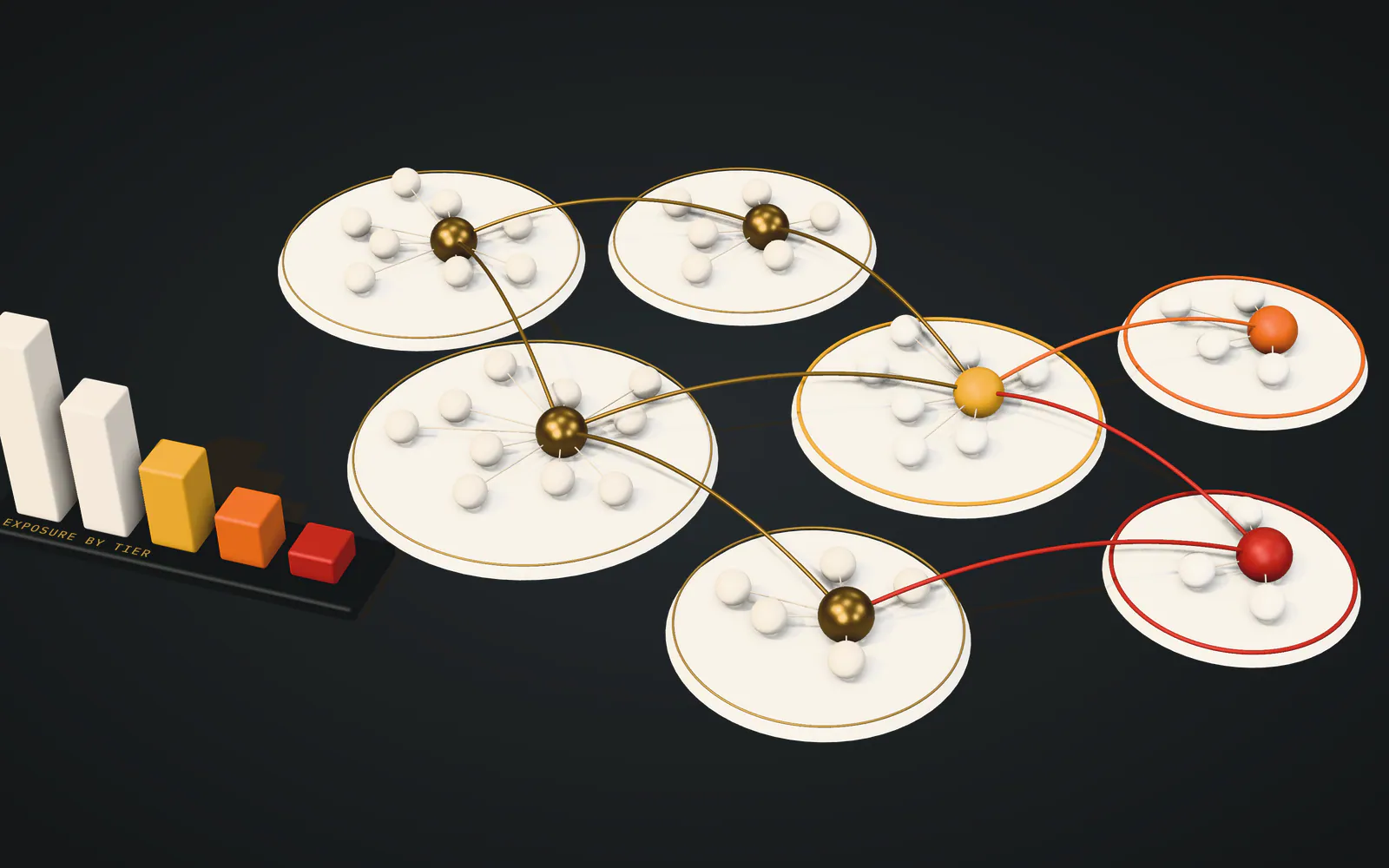
Quantix builds that analysis from transaction data rather than from labels alone. Each address receives a category, a value-weighted exposure to the categories it transacted with, directly and through intermediaries, and a set of behavioural indicators such as structured splits, peel chains and shared gas funders.
The result is a score you can explain. Every number traces back to transfers, every link that rests on inference rather than observation is marked as such, and every report states what the analysis cannot see: off-chain transfers inside a service, private order flow, and mixing pools where only timing connects a deposit to a withdrawal.
We work with exchanges and on-ramps on screening policy, with custodians and payment providers on monitoring, and with protocol and treasury teams on investigations after an incident.
- Address formats
- EVM, Solana, Move, Cosmos
- Exposure
- Direct and indirect, up to six hops, value-weighted
- Output
- Explained score, exposure paths, indicators, chronology
- Alignment
- FATF Recommendations 15 and 16 (risk-based approach, travel rule)
Applies to
- Exchanges and on/off-ramps
- Custodians and payment providers
- DeFi front ends with screening obligations
- Treasury and investigations teams
Address analysis · forensic case file
Open the full analysisEthereum · wallet
Withdrawal wallet W3
Laundering0xb5c096d4c8da849dcd0efa2465cff27a35eee4dd94/ 100
Severe risk
- Direct mixing-service interaction1 transfer to or from a mixing service.
- New address moving large valueFirst large outflow within 72 hours of first funding.
- Shared gas funderGas paid by an address that also funds 7 other addresses.
- Exchange depositValue sent to an exchange deposit cluster, a point where the holder may be identifiable.
| Category | Direct | Indirect | Share |
|---|---|---|---|
| Mixing service | $235k | $67 | 100% |
| Category | Direct | Indirect | Share |
|---|---|---|---|
| Exchange | $235k | – | 100% |
Threats addressed
Patterns that move illicit value.
- Dispersal
Structured splitting
Proceeds divided into near-equal parts within minutes to run parallel routes and stay under per-transfer thresholds.
- Dispersal
Peel chains
One balance moved in steps: part sent to a service at each hop, the rest forwarded to a fresh address.
- Obfuscation
Mixing services
Pooled contracts that break the observable link between deposit and withdrawal, leaving only timing and amounts.
- Obfuscation
Chain hopping
Bridging and swapping across ecosystems within hours, so each chain shows only part of the route.
- Obfuscation
Swap recipient changes
Swaps whose output is sent to a different address than the sender, breaking naive address-to-address tracing.
- Source
Exploit and phishing proceeds
Funds taken through protocol exploits or signature phishing, typically moved within the first hours.
- Source
Fraudulent token launches
Liquidity withdrawn and supply minted by a token owner, then converted to liquid assets.
- Exit
Exchange deposit clusters
Deposit addresses reused across stages of a laundering route: the point where a holder can often be identified.
- Exit
Dormant balances
Proceeds parked in wallets with no activity, waiting for attention to move elsewhere.
Technical capabilities
Classification, exposure, graphs and reports.
Address classification
Categories assigned from behaviour and known service patterns, with the basis for each classification recorded.
- Wallet, contract, pool, bridge, exchange and mixer roles
- Same-key detection across EVM chains
- Format validation per chain family
Exposure scoring
Value followed forward and backward in time, split proportionally across intermediaries, reported as direct and indirect exposure by category.
- Up to six hops
- Swap and bridge legs followed as one flow
- Score broken down into its inputs
Fund-flow graphs
Interactive graphs of an investigation: filter by transaction type and value, replay over time, trace time-ordered paths.
- Observed and heuristic links separated
- Time-respecting path search
- Exportable transfer lists
Case reporting
Investigation reports that counsel, exchanges and law enforcement can follow: chronology, leads, and the evidence behind each.
- Exchange identification requests
- Dormant-balance watch lists
- CSV and Markdown evidence packs
Assessment methodology
From policy to evidence.
- 01
Define the decision
Which decisions the analysis supports (onboarding, withdrawals, reporting) and the risk appetite behind each.
- 02
Assemble the data
Transactions, internal transfers, swap and bridge legs, decoded per chain, with the gaps in coverage written down.
- 03
Classify
Categories for every address in scope, each with its basis: observed behaviour, service pattern or prior investigation.
- 04
Trace and score
Exposure in both directions, behavioural indicators, and a score whose every input can be shown.
- 05
Review
An analyst reads the paths behind every elevated result; heuristic links never stand alone as evidence.
- 06
Report and tune
Results, leads and recommendations delivered; thresholds tuned against the decisions they produced.
Tools & techniques
How the analysis is done.
| Tool or technique | Category | What it is used for |
|---|---|---|
| Quantix transaction graph | Graph analysis | Interactive fund-flow graphs, path search and case chronologies. |
| Value-weighted exposure model | Scoring | Direct and indirect exposure by category with proportional splitting across intermediaries. |
| Call and instruction tracing | Data | EVM call traces, Solana inner instructions and Cosmos authz and IBC packets decoded into transfers. |
| Swap and bridge leg matching | Data | Legs of one swap or bridge transfer joined so value is followed through pools and across chains. |
| Heuristic library | Attribution | Common gas funders, structured splits, peel chains, same-key detection, mixer timing (marked heuristic). |
| Address format validation | Input checks | EIP-55 checksums for EVM, the base58 alphabet for Solana, 32-byte Move ids and bech32 characters checked before any lookup. |
| Risk-based policy design | Governance | Score bands, decisions and owners aligned with the FATF risk-based approach for virtual asset service providers. |
| Evidence export | Reporting | Transfer lists and case summaries in CSV and Markdown with transaction identifiers. |
Ecosystem coverage
Technical depth per execution environment.
Ethereum
Layer 1, proof of stake EVM
- Programming languages
- SolidityVyperYul
- Monitoring capabilities
- Proxy admin and implementation changes
- Governance proposals and timelock queues
- Large transfers and treasury outflows
- Oracle deviation against reference feeds
- Typical vulnerabilities
- Reentrancy, including read-only reentrancy
- Oracle and spot-price manipulation
- Access control on privileged functions
- Proxy storage collisions and initializer misuse
- Signature replay across chains and contracts
- Front-running and MEV exposure
- Assessment methodologies
- Line-by-line manual review
- Invariant fuzzing (Foundry, Echidna)
- Symbolic execution and formal verification
- Economic attack modelling
- Supported standards
- ERC-20ERC-721ERC-1155ERC-4626EIP-2612EIP-712ERC-1967ERC-4337
Ecosystems indicate technical specialisation only, not partnerships or endorsements.
Deliverables
What you receive.
Address and wallet risk reports
Score, category, exposure in both directions, indicators, and the transactions behind each.Fund-flow investigation reports
Chronology, graph, exposure of the starting addresses, and open leads with the route that reached each.Screening policy and thresholds
Score bands mapped to decisions and owners, tuned against the decisions they would have produced.Analyst workspace access
The Quantix graph, address analysis and case files for the addresses in your engagement.
Screening policy, designed with you.
An example of the threshold design delivered with screening work: each score band maps to a decision and an owner. Bands and actions are set with your compliance team; the counts show how the wallets of the worked example above would fall.
| Band | Score | Decision | Case file wallets |
|---|---|---|---|
| Low | 0–19 | Proceed. Record the result with the screening date. | 9 |
| Moderate | 20–39 | Proceed and add the address to periodic re-screening. | 0 |
| Elevated | 40–59 | Enhanced review: analyst reads the exposure paths before approval. | 0 |
| High | 60–79 | Hold. Analyst review with documented rationale; second approver required. | 0 |
| Severe | 80–100 | Do not proceed. Escalate to the compliance officer for a reporting decision. | 29 |
Relevant research
Read the work behind the service.
Publications
- Threat IntelligenceDetecting suspicious on-chain behaviour before the exploit transaction
- Incident AnalysisAnatomy of cross-chain bridge exploits
- Wallet SecurityOff-chain signatures, on-chain losses: the anatomy of approval phishing
- DeFi SecurityUnderstanding oracle manipulation: designs and their failure modes
FAQ
Questions teams ask before an engagement
Screening you can explain. Investigations that hold up.
Tell us which decisions the analysis must support, or which transactions you need traced. We will reply with scoping questions.