

Continuous Security Monitoring
Detection rules for the events that matter after deployment.
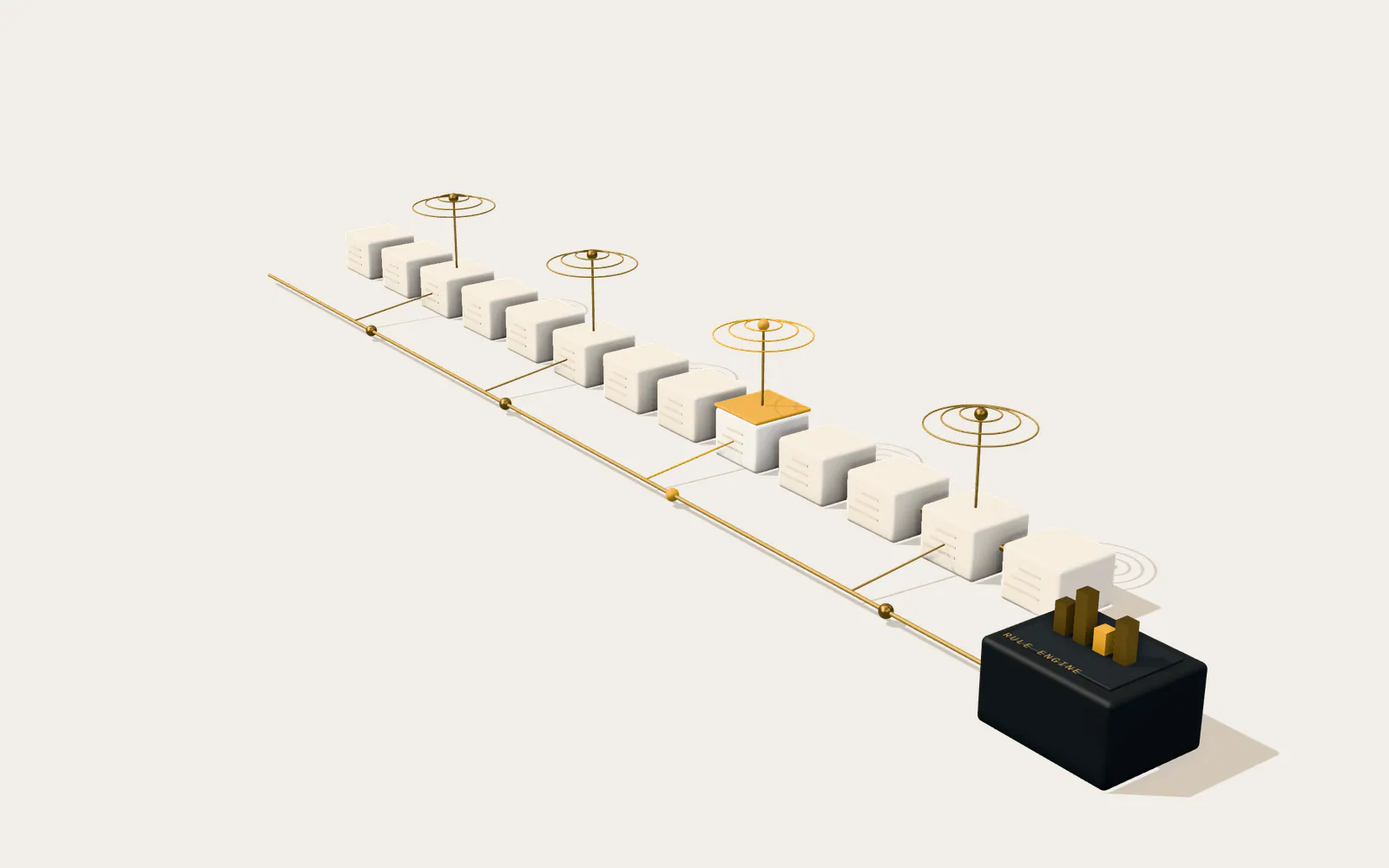
Service overview
Most attacks are visible on-chain before they are finished.
An upgrade that nobody approved, a role granted at three in the morning, a treasury transfer larger than any payment schedule: these are visible in the chain’s own record, often minutes before the damage is complete. Monitoring turns them into alerts that reach someone who can act.
Useful monitoring is specific to the protocol. Rules are derived from its privileged roles, its dependencies and its value flows, and each rule is tested against historical activity before it is deployed. Generic rule packs come second.
The output is a rule set, routing and runbooks your team understands and can maintain. We design and tune it with you; we do not ask you to trust a black box.
- Starts from
- Your threat model or latest audit report
- Watches
- Roles, upgrades, treasuries, oracles, transaction patterns
- Hands over
- Rules as code, routing matrix, runbooks
Applies to
- Deployed protocol contracts
- Multisig and governance executors
- Treasury and fee-collection addresses
- Proxy admin and upgrade paths
- Oracle feeds and price dependencies
- Bridge and cross-chain message flows
Threats addressed
What monitoring is designed to catch.
- Key compromise
Privileged role used unexpectedly
An admin, guardian or owner key acting outside its normal pattern, or transferring its role to a new address.
- Upgrade risk
Unapproved implementation
A proxy pointed at bytecode that does not match any approved release, or an admin change on the proxy itself.
- Governance manipulation
Hostile or rushed proposals
Proposals that move treasury funds, change roles or shorten delays, especially after a sudden accumulation of voting power.
- Oracle manipulation
Price feed out of bounds
Deviation between sources, stale heartbeats, sequencer downtime, or a spot price moved within a single block.
- Flash-loan exploit
Attack-shaped transactions
Borrow, manipulate, extract and repay within one transaction, often from a freshly deployed contract.
- Treasury drain
Outflows above any schedule
Transfers from treasuries, fee collectors and multisigs that do not match approved proposals or payment schedules.
- Bridge message validation
Messages that should not exist
Releases without a matching deposit, repeated nonces, or messages for a destination they were not signed for.
- Signature phishing
Mass approval drains
Clusters of approvals or permits to one new spender, followed by transferFrom calls across many holders.
- Liquidity risk
Liquidity pulled or concentrated
Sudden withdrawal of pool liquidity, collateral concentration, or utilisation drifting toward a threshold.
Technical capabilities
The events that matter after deployment.
Privileged operations
Every call that only an admin, guardian or governor can make, matched against what was expected to happen.
Contract events
Event streams decoded into protocol terms, so an alert says what changed rather than which log fired.
Treasury movements
Outflows from treasuries, fee collectors and multisigs, compared with approved proposals and payment schedules.
Contract upgrades
Implementation changes, admin transfers and timelock queues, checked against the releases you approved.
Transaction patterns
Sequences that precede known attack classes: flash-loan round trips, sudden approvals, unusual call ordering.
Security alerts
Severity assigned by rule, deduplicated and routed with the runbook step that should follow.
Risk indicators
Slower signals: utilisation, collateral concentration, oracle deviation and liquidity depth drifting toward thresholds.
Alert routing
Who is told, through which channel, and what they are expected to do within the first minutes.
Rules, alerts and runbooks in one view.
The console below runs the recorded investigations of Quantix Security Monitoring. Filter the threat timeline, open the detection rule behind each alert, or step through an incident event by event. Watched contracts on live networks are followed in contract monitoring.
Quantix Security Monitoring
Investigation archive · 83 recorded events through 24 Oct 2026, 09:00 UTC
- Events in view
- 83
- Alerts at current rules
- 50
- Critical alerts
- 10
- Open or acknowledged
- 13
| Category | Critical | High | Medium | Low | Informational |
|---|---|---|---|---|---|
| Nov 25 | 0 | 0 | 2 | 1 | 1 |
| Dec 25 | 0 | 0 | 1 | 1 | 0 |
| Jan 26 | 0 | 0 | 2 | 0 | 1 |
| Feb 26 | 0 | 0 | 1 | 1 | 1 |
| Mar 26 | 0 | 2 | 1 | 0 | 0 |
| Apr 26 | 0 | 0 | 1 | 1 | 1 |
| May 26 | 0 | 4 | 1 | 2 | 1 |
| Jun 26 | 1 | 2 | 4 | 2 | 1 |
| Jul 26 | 2 | 3 | 3 | 1 | 1 |
| Aug 26 | 3 | 2 | 5 | 1 | 1 |
| Sept 26 | 1 | 2 | 4 | 3 | 1 |
| Oct 26 | 3 | 5 | 4 | 1 | 1 |
Select a month to filter the timeline.
83 events listed
Assessment methodology
From threat model to rule.
- 01
Start from the threat model
Rules are derived from what could hurt this protocol: its privileged roles, its dependencies, its value flows.
- 02
Write detection logic
Each rule states what it watches, the condition that triggers it, its severity and the reasoning behind the threshold.
- 03
Replay against history
Rules are replayed against past activity to measure how often they would have fired. Noise is treated as a defect.
- 04
Route alerts
Alerts reach named people through agreed channels, each linked to a runbook step and an escalation path.
- 05
Rehearse the response
The first response is rehearsed before it is needed: who pauses, who signs, who communicates.
- 06
Review and retune
Rules are reviewed after every upgrade, new integration or incident, and on a regular cadence agreed with your team.
Anatomy of a rule.
Each rule states what it watches, the condition that triggers it, its severity, where it is routed, the first runbook steps and the reasoning behind the threshold. Rules are versioned and reviewed like code.
rule: proxy-implementation-changedwatch: ProxyAdmin # your deploymentevent: Upgraded(address implementation)when: implementation not in approved_releasesseverity: criticalroute: on-call -> incident channelrunbook: 1. verify bytecode hash 2. pause affected contracts 3. open the incident channelrationale: an unapproved implementation can change any logic behind the proxyWhat monitoring cannot do.
- Detection is not prevention
- An alert arrives after a transaction is observed. Monitoring shortens the time to respond; it does not stop a transaction that is already included.
- Some activity is invisible until inclusion
- Transactions sent through private order flow are not visible in the public mempool. Rules that depend on pending transactions say so.
- Alerts need people
- Value depends on someone being able to act: a guardian who can pause, signers who can be reached. We help design that, but cannot replace it.
- The monitoring stack is a target too
- Alert channels, API keys and automation that can pause contracts must be secured with the same care as the protocol itself.
Tools & techniques
Data sources and techniques behind each rule.
| Tool or technique | Category | What it is used for |
|---|---|---|
| Event and log indexing | Data source | Decoded contract events from archive or full nodes, reorganisation-aware, with block confirmations stated per rule. |
| Call traces (debug_traceTransaction) | Data source | Internal calls, delegatecalls and value transfers that never emit an event. |
| Pending transaction observation | Data source | Public mempool subscriptions for rules that can act before inclusion, with the private-order-flow blind spot stated. |
| Fork simulation (Foundry anvil) | Analysis | Simulates a queued proposal or suspicious transaction against a fork to see its effect before execution. |
| Price feed health checks | Oracle monitoring | Heartbeat, deviation between sources and L2 sequencer uptime feeds, per the oracle provider’s documentation. |
| Multisig queue monitoring | Governance | Pending Safe transactions and timelock queues decoded and compared with approved actions. |
| Rules as code with tests | Engineering | Versioned rule definitions, each tested against recorded incidents and documented with its threshold. |
| Signed webhooks and paging | Routing | Delivery to paging, chat and incident tools with authenticated payloads and an escalation chain. |
Ecosystem coverage
Technical depth per execution environment.
Ethereum
Layer 1, proof of stake EVM
- Programming languages
- SolidityVyperYul
- Monitoring capabilities
- Proxy admin and implementation changes
- Governance proposals and timelock queues
- Large transfers and treasury outflows
- Oracle deviation against reference feeds
- Typical vulnerabilities
- Reentrancy, including read-only reentrancy
- Oracle and spot-price manipulation
- Access control on privileged functions
- Proxy storage collisions and initializer misuse
- Signature replay across chains and contracts
- Front-running and MEV exposure
- Assessment methodologies
- Line-by-line manual review
- Invariant fuzzing (Foundry, Echidna)
- Symbolic execution and formal verification
- Economic attack modelling
- Supported standards
- ERC-20ERC-721ERC-1155ERC-4626EIP-2612EIP-712ERC-1967ERC-4337
Ecosystems indicate technical specialisation only, not partnerships or endorsements.
Deliverables
A monitoring setup your team can read, run and change.
Threat-to-rule mapping
Every rule traced to the threat it detects, and every material threat to a rule or a stated gap.Rule set as code
Versioned definitions with conditions, thresholds, severities and rationale.Replay and tuning report
How often each rule would have fired historically, and how thresholds were set.Routing matrix
Who is alerted for what, through which channel, with escalation paths.Runbooks
First-response steps per alert type, including who can pause and how to reach signers.Review cadence
An agreed schedule and triggers for revisiting rules after upgrades and incidents.
Key assessment areas
- Privileged contract operations
- Smart contract event streams
- Treasury and large-value movements
- Contract upgrades and admin changes
- Suspicious transaction patterns
- Protocol risk indicators
Typical deliverables
- Monitoring design derived from the threat model
- Detection rule set with thresholds and rationale
- Alert routing and escalation runbook
- Periodic tuning and coverage review
Relevant research
Read the work behind the service.
Publications
- Threat IntelligenceDetecting suspicious on-chain behaviour before the exploit transaction
- DeFi SecurityGovernance attacks in DeFi
- Smart Contract VulnerabilitiesUpgradeable proxy security: storage, selectors and the upgrade path
- DeFi SecurityUnderstanding oracle manipulation: designs and their failure modes
- Blockchain InfrastructureMEV and protocol risk
FAQ
Questions teams ask before an engagement

Know when something changes.
Tell us which contracts are deployed, who holds privileged roles and how your team responds today. We will propose the rules worth running first.