What it costs to move a price: reasoning about oracle manipulation
Every price source has a cost of manipulation. Protocols are safe only while that cost exceeds what an attacker can extract. A framework for estimating both sides.
- Written by
- Quantix Research, DeFi Security
- Published
- Reading time
- 7 minutes
- Category
- DeFi Security
Primer. Explains a known class of issue. Code is simplified and illustrative, not for production use.
Contents
Every price a protocol reads has a cost of manipulation: the amount an attacker must spend to make it report the wrong number for long enough to matter. Every protocol that acts on a price also has a profit from manipulation: the value an attacker can extract while the price is wrong. A design is safe against this class of attack only while the first number stays larger than the second.
This primer sets out a way to estimate both sides. The arithmetic is deliberately simple; the point is to make the comparison explicit, because many oracle failures come from never having made it.
The inequality that matters
For a given price source and a given use of that price, the protocol is exposed when:
cost to move the price < value extractable while it is moved
Both sides change over time. Liquidity in a pool rises and falls; a lending market’s deposits grow; a governance vote raises a collateral factor. A price source that was adequate at launch can become inadequate without a line of code changing. That is why the comparison belongs in monitoring as well as in design review.
Spot prices: the cost is a fee
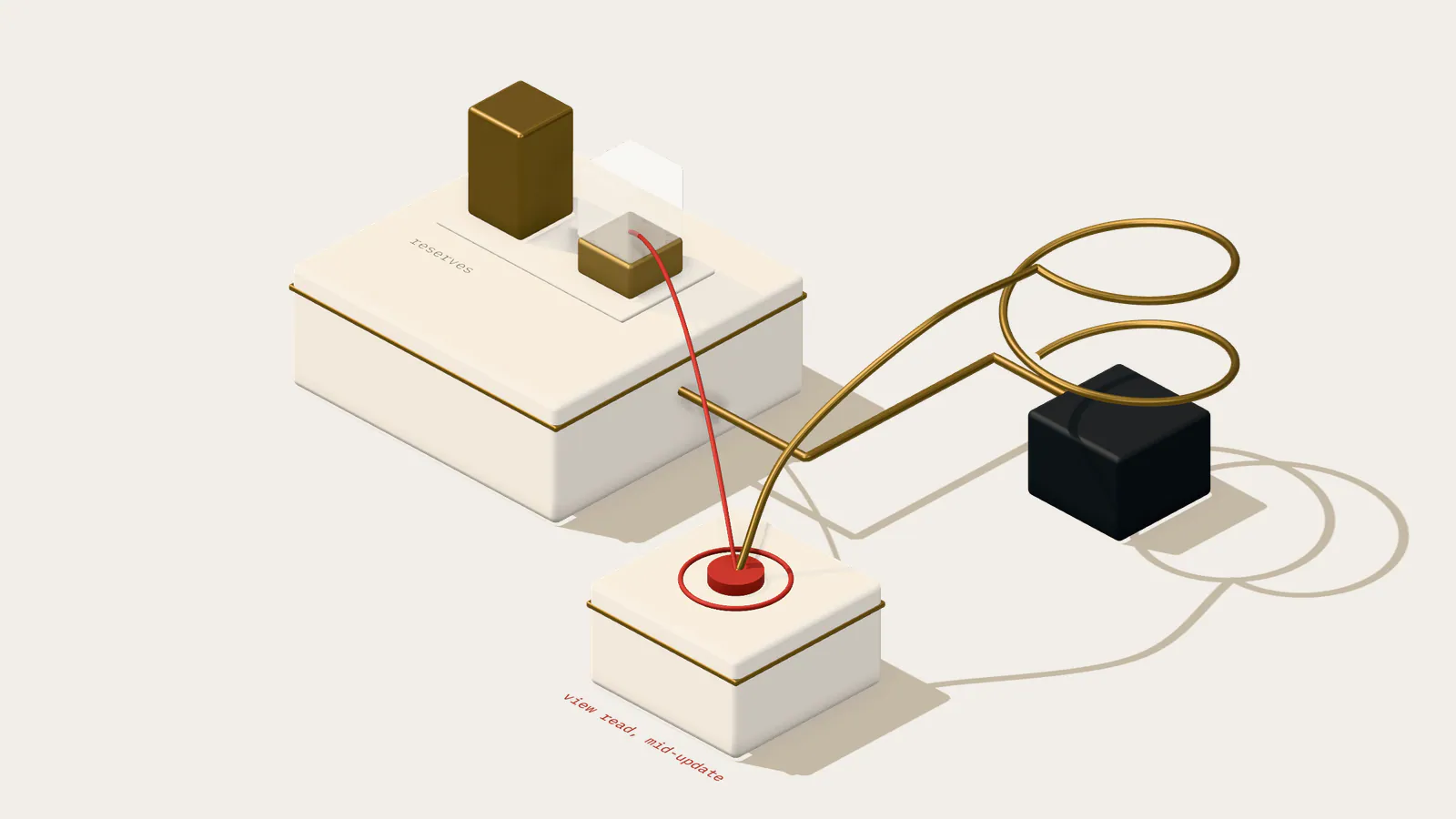
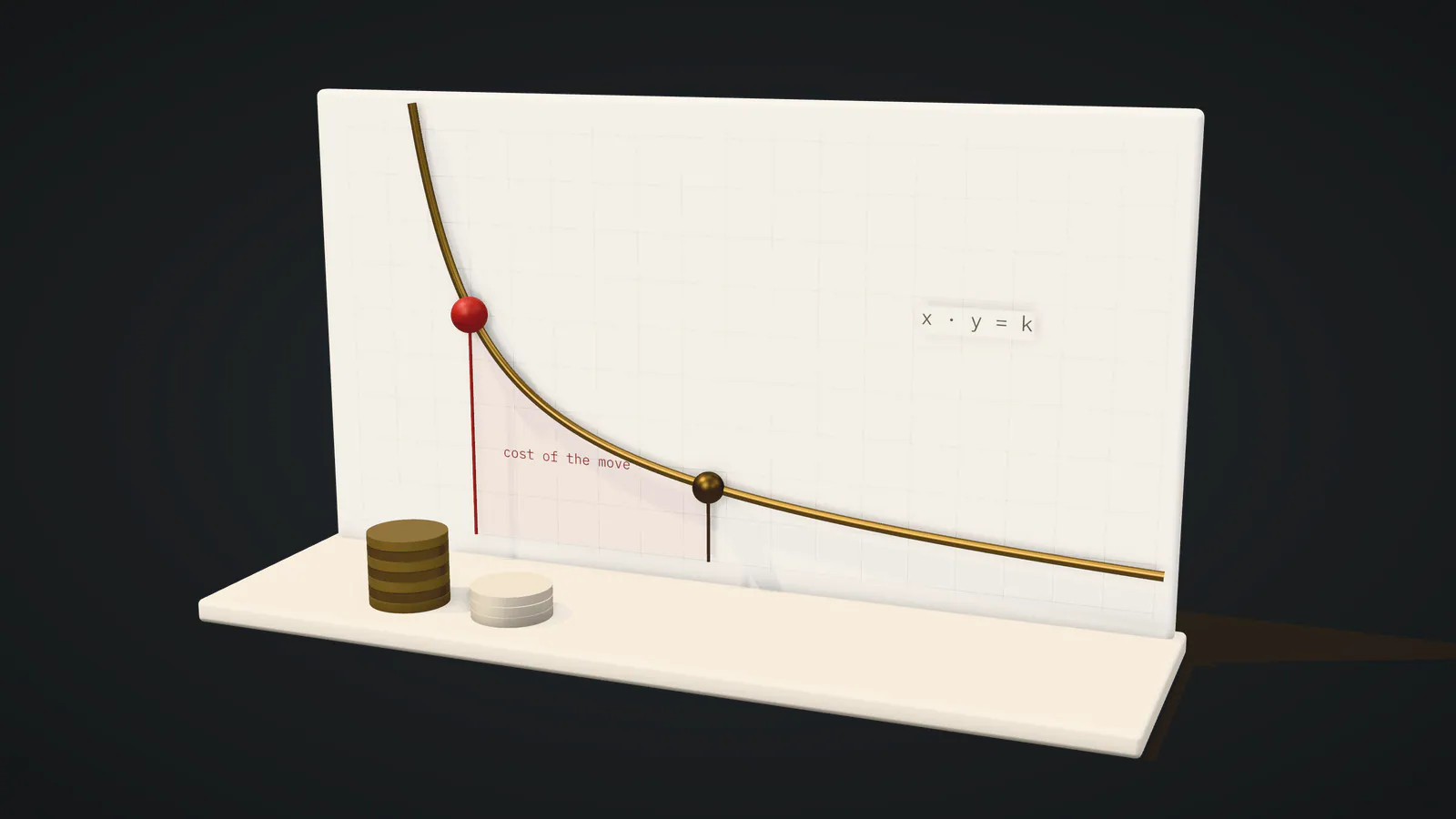
The current price of an automated market maker is a ratio of its reserves, and reserves can be moved by trading. If a protocol reads that ratio in the same transaction in which an attacker has moved it, the attacker can trade, let the protocol act on the distorted price, and trade back before the transaction ends.
Because the round trip completes inside one transaction, the attacker is not exposed to the market in between. Flash loans remove the need for their own capital. What remains is the trading fee on both legs, and the flash-loan fee if one is charged. In other words, the cost of manipulating a spot price is small and roughly proportional to the size of the move, regardless of how much liquidity the pool has.
A worked example
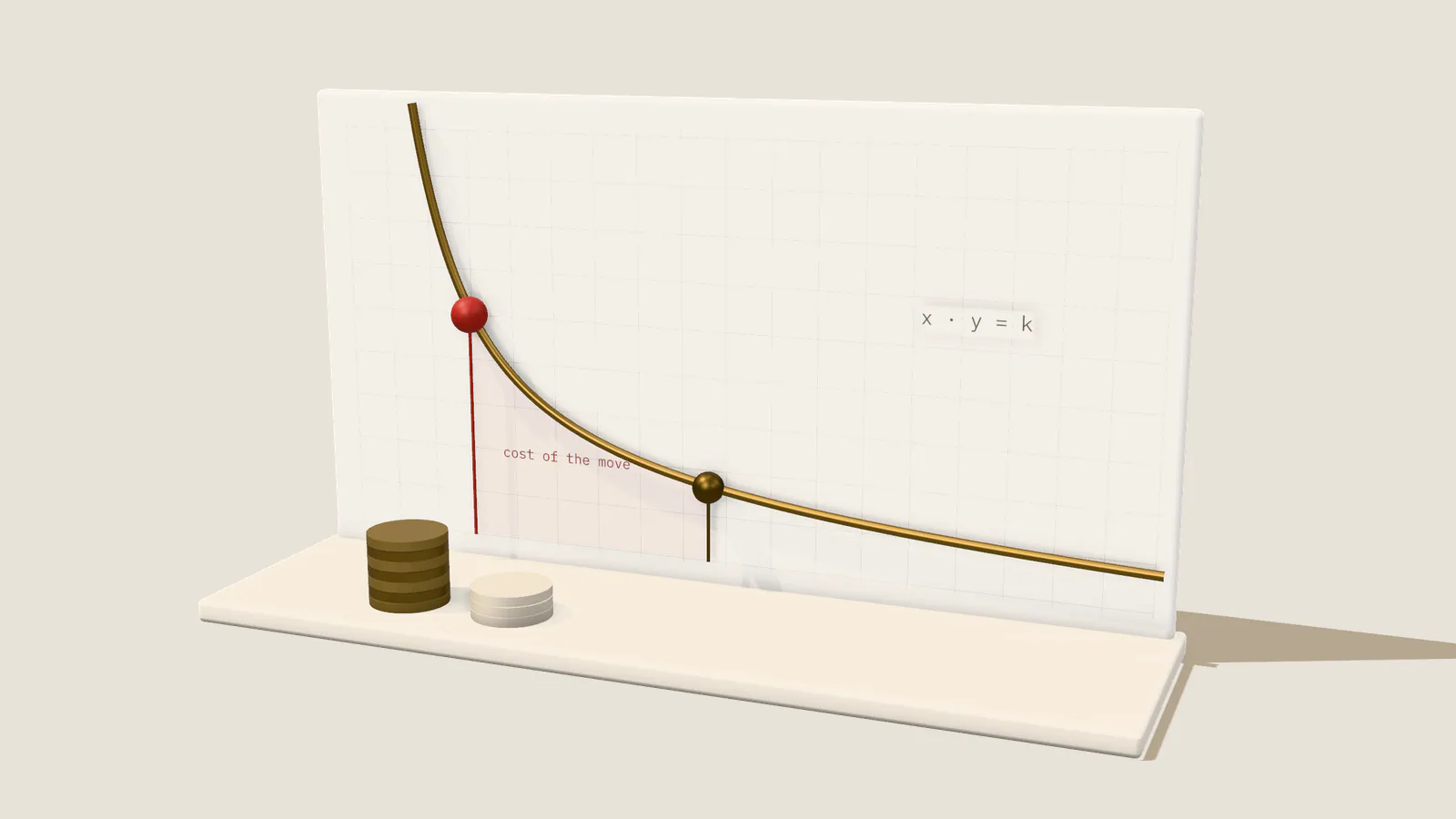
Take a constant-product pool holding 1,000 units of a volatile asset and 3,000,000 units of a stablecoin, so the spot price is 3,000. Doubling the reported price requires adding about 1.24 million stablecoins and removing about 293 units of the asset.
// Constant-product pool (x * y = k_pool), fees ignored.// To multiply the price of X (quoted in Y) by a factor m,// an attacker adds Y and removes X until the reserves are:// x' = x / sqrt(m) y' = y * sqrt(m)export function costToMovePrice(x: number, y: number, m: number, feeRate = 0.003) { const yIn = y * (Math.sqrt(m) - 1) // Y paid into the pool const xOut = x * (1 - 1 / Math.sqrt(m)) // X taken out // Round trip inside one transaction: the attacker sells xOut back. // Ignoring second-order effects, what is lost is roughly the fees on both legs. const feeCostInY = feeRate * yIn + feeRate * xOut * (y / x) return { yIn, xOut, feeCostInY }} costToMovePrice(1_000, 3_000_000, 2)// => { yIn: 1242641, xOut: 292.9, feeCostInY: about 6,400 }With a 0.3% fee, the round trip costs in the order of 6,400 stablecoins. Now suppose a lending market values collateral at that pool’s spot price with an 80% loan-to-value ratio. An attacker who posts 100 units of the asset as collateral at the doubled price can borrow 480,000 stablecoins against collateral really worth 300,000. The extractable value is about 180,000, the cost is about 6,400, and the inequality is violated by a factor of almost thirty.
Time-weighted averages
A time-weighted average price (TWAP) changes the cost structure. Uniswap v2 pairs accumulate the price at each block in a cumulative variable; v3 pools accumulate the active tick, which yields a geometric mean price over the chosen interval. To shift a TWAP materially, an attacker must hold the pool away from the market price across many blocks, and in every block arbitrageurs can trade against the distortion. Uniswap’s own analysis notes that the cost of manipulating a simple TWAP rises roughly linearly with liquidity and with the length of the averaging window.
That makes window length and pool depth security parameters, with two caveats:
- Consecutive blocks. Under proof of stake, block proposers are known shortly in advance. A party that controls several consecutive slots can hold a distorted price across them without arbitrage in between, which lowers the cost of manipulating short windows.
- Lag. A longer window resists manipulation but follows genuine moves slowly. During a fast market a lagging price can itself be exploited, for example by borrowing against collateral that has already lost value.
Push oracles and their failure modes
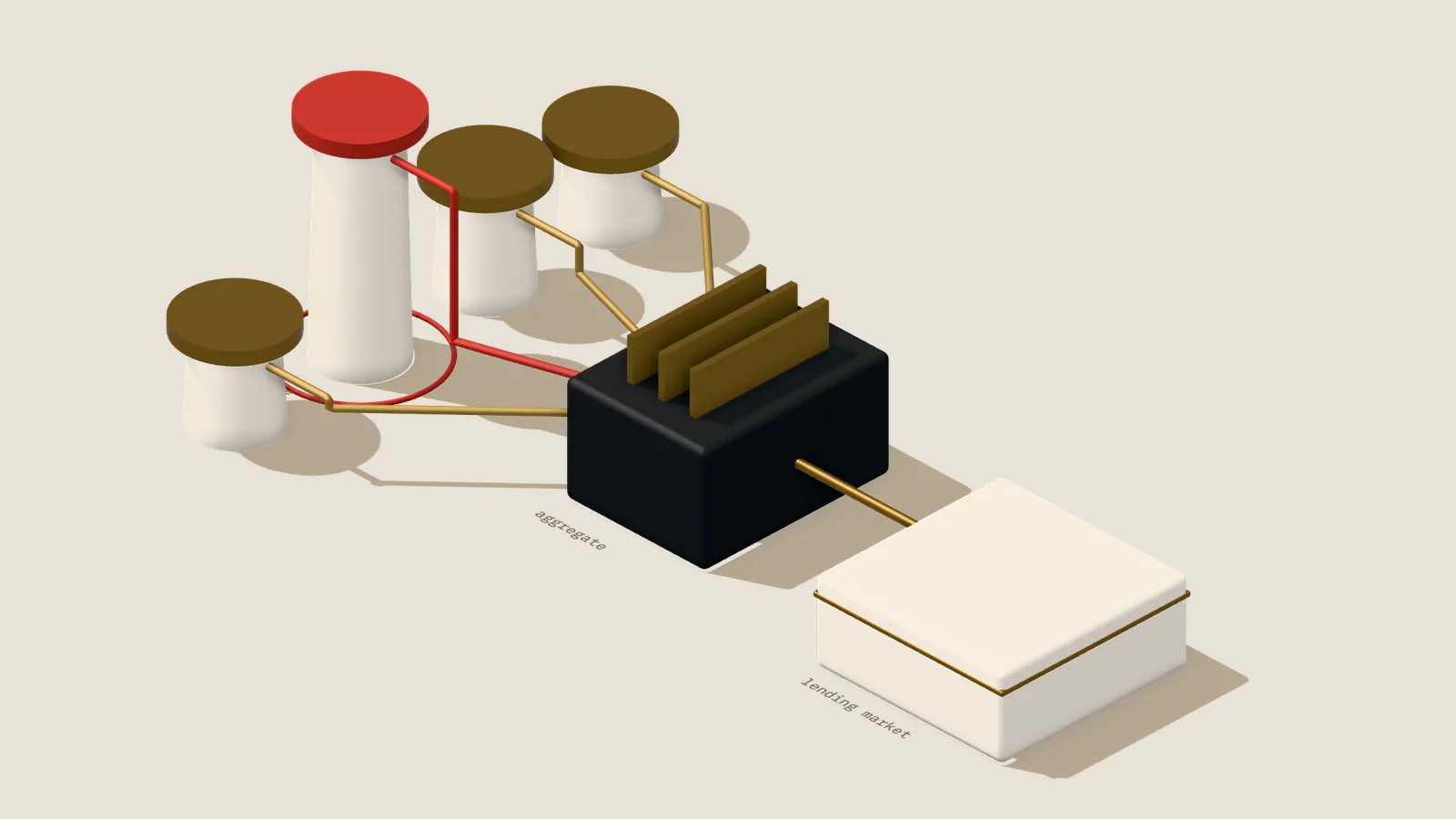
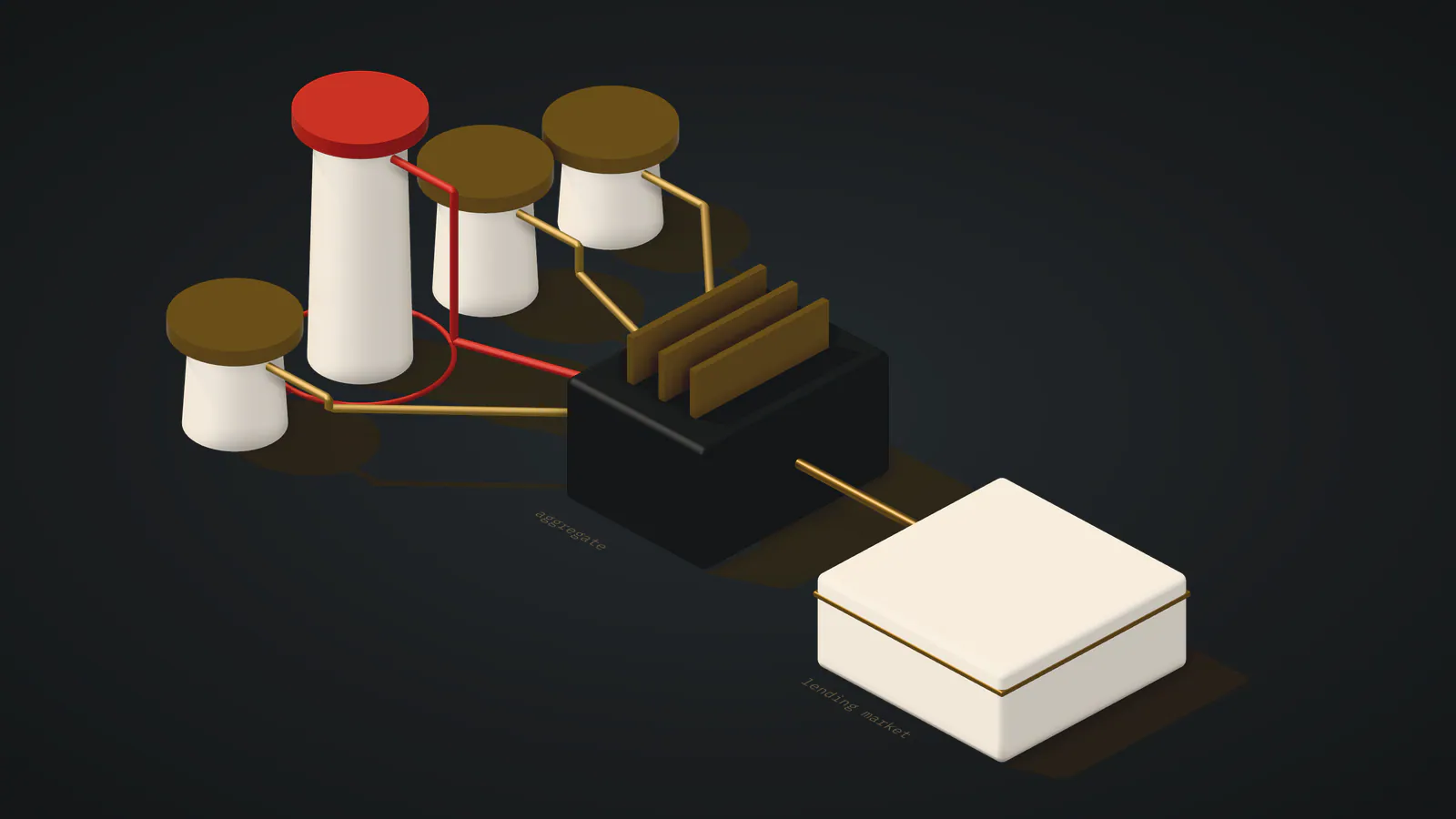
Push oracles aggregate prices off-chain from many sources and write them on-chain when the price deviates by a threshold or when a heartbeat interval passes. Manipulating them generally means moving the underlying markets broadly, which is far more expensive than moving one pool. Their failure modes are different: stale answers if updates stop, a lagging value between updates, and, on rollups, prices that cannot be acted on fairly while the sequencer is down. The defensive read below checks for each.
The heartbeat and deviation threshold of each feed are published parameters, and they differ between assets and networks. A staleness check that uses one constant for every feed will either reject healthy prices for slow-moving assets or accept stale ones for fast-moving assets. The tolerance should be configured per feed, from the feed’s own documented heartbeat, with a margin for network delays.
// Illustrative price read with defensive checks (Chainlink-style feed).function _price() internal view returns (uint256) { (, int256 answer, , uint256 updatedAt, ) = feed.latestRoundData(); if (answer <= 0) revert InvalidPrice(); if (block.timestamp - updatedAt > HEARTBEAT) revert StalePrice(); // On rollups, refuse prices while the sequencer is down or just restarted. (, int256 status, uint256 startedAt, , ) = sequencerUptimeFeed.latestRoundData(); if (status != 0) revert SequencerDown(); if (block.timestamp - startedAt < GRACE_PERIOD) revert GracePeriodNotOver(); uint256 p = uint256(answer) * 10 ** (18 - feed.decimals()); // Cross-check against an independent, manipulation-resistant reference. uint256 twapPrice = _twap(TWAP_WINDOW); if (_deviationBps(p, twapPrice) > MAX_DEVIATION_BPS) revert PriceDeviation(); return p;}| Price source | Manipulation window | Main cost driver | Typical defences |
|---|---|---|---|
| AMM spot price | Within one transaction | Swap fees on a round trip; capital from flash loans | Do not use for valuation or settlement. |
| AMM TWAP | Across the averaging window | Arbitrage losses per block, scaling with liquidity and window length | Long enough windows, minimum liquidity, cross-checks. |
| Push oracle feed | Depends on the source markets and update rules | Moving many markets at once, or exploiting staleness and lag | Heartbeat and positivity checks, deviation bounds, sequencer checks. |
| Internal exchange rates | Within one transaction | Donations to inflate balances; reentrancy windows | Virtual offsets, rate-of-change limits, view guards. |
Reducing what an attacker can extract
The other side of the inequality is often easier to control. Even a sound price source should be paired with limits on how much value can move while it is wrong:
- Supply and borrow caps per asset, sized to the depth of the markets that price it.
- Conservative collateral factors for assets with thin or concentrated liquidity.
- Rate limits on borrowing, minting or withdrawals per block or per window.
- Circuit breakers that pause specific actions when two price sources diverge.
- Monitoring that recomputes the cost of manipulation as liquidity changes, and alerts when it falls.
Measuring it in practice
The worked example used a single pool with a simple curve. Real estimates take a little more care, but follow the same steps.
- Map every price the protocol consumes, including indirect ones: the exchange rate of a vault token used as collateral, or a pool price used to value a liquidity position.
- Find where each price can be moved. For an aggregated feed, that is the set of markets it sources from; for an on-chain average, the pool and its depth across the price range an attacker would push through.
- Estimate the cost for moves of 5%, 10% and 50%, held for the duration the protocol needs to be fooled. Simulating trades against a fork of current chain state is more reliable than closed-form approximations, especially for concentrated liquidity.
- Estimate the profit at each move size, given current deposits, caps and collateral factors, including second-order effects such as liquidations the distorted price would trigger.
- Record the margin and the parameters it depends on, so that it can be recomputed when liquidity or configuration changes.
Concentrated liquidity deserves a specific note. In pools where liquidity providers choose price ranges, the depth available near the current price can be large while the depth a few percent away is thin. The cost of a small move may be high and the cost of a large one surprisingly low, which is the opposite of what a constant-product intuition suggests. Estimates must walk the actual liquidity distribution.
When Quantix reviewers assess a protocol’s pricing, they write both numbers down: what it would cost to move each price the protocol uses, and what the protocol would let an attacker take if it moved. The second number is the one teams most often have never calculated.
Conclusions
A price source is not safe or unsafe in itself. It is safe for a particular use while the cost of moving it exceeds what that use lets an attacker extract. Spot prices fail that test for almost any valuation, averages pass it only with enough liquidity and a long enough window, and push feeds move the question to staleness and the markets they aggregate.
Because both sides change as liquidity and parameters change, the comparison belongs in monitoring as well as in design review. Our analysis of oracle designs compares the failure modes of each design in more detail.
Recommendations
Protocol designers
- For every price the protocol consumes, write down both sides of the inequality with numbers.
- Never value collateral or settle trades at a spot reserve ratio.
- Size caps and collateral factors to the cost of manipulating each price source.
Risk and operations
- Recompute the cost of manipulation as liquidity changes, and alert when it falls below the value at risk.
- Pause sensitive actions when independent price sources diverge.
Reviewers
- Include indirect prices, such as vault exchange rates and liquidity token valuations, in the map of consumed prices.
- Repeat the worked example with the protocol’s real pools, parameters and caps.
Bibliography
Primary sources: standards, official documentation, incident reports and papers.
- 1Uniswap v2 Oracles(opens in a new tab)Uniswap Developers
- 2Price Oracles (Uniswap v3)(opens in a new tab)Uniswap Developers
- 3Chainlink Data Feeds(opens in a new tab)Chainlink documentation
- 4L2 Sequencer Uptime Feeds(opens in a new tab)Chainlink documentation
- 5Oracles(opens in a new tab)ethereum.org developer documentation
Applied on this site
Assessments, case studies and tools that apply this publication.